Teams often need to choose a limited set of options from a much larger list. This comes up when designing products, prioritizing features, developing menus, or planning offerings of any kind.
The challenge is deciding which combination of options will appeal to the largest number of people. TURF analysis is designed to answer that question.
What TURF Stands For (and What It Does)
TURF stands for Total Unduplicated Reach and Frequency. It’s used to identify the combination of options that appeals to the highest percentage of people while accounting for overlap. If two options appeal to many of the same people, offering both does not increase reach as much as it might seem.
The goal is to find a set of options that brings in as many unique people as possible.
When to Use TURF
TURF is ideal when you need to select a limited number of options from a larger set and you want to maximize appeal across your target audience. Common applications include:
Product line optimization: Which flavors, sizes, or variants should you offer?
Menu planning: What combination of dishes or beverages maximizes customer appeal?
Media planning: Which channels reach the most unique people in your target audience?
Feature prioritization: Which feature bundle appeals to the broadest customer base?
How the Analysis Works
The input is straightforward: you ask respondents which items from your list they would consider buying, using, or choosing. Each person can select multiple items.
The algorithm then tests every possible combination to find which set of N items reaches the highest percentage of respondents. For example, if you need to pick 4 flavors from 15 options, the analysis evaluates all 1,365 possible combinations and identifies the one that appeals to the most people.
The output shows you the optimal combination at each grouping, like the best single item, best pair, best trio, and so on, along with the incremental reach each addition provides.
Reading the Results
A typical TURF output might look like this:
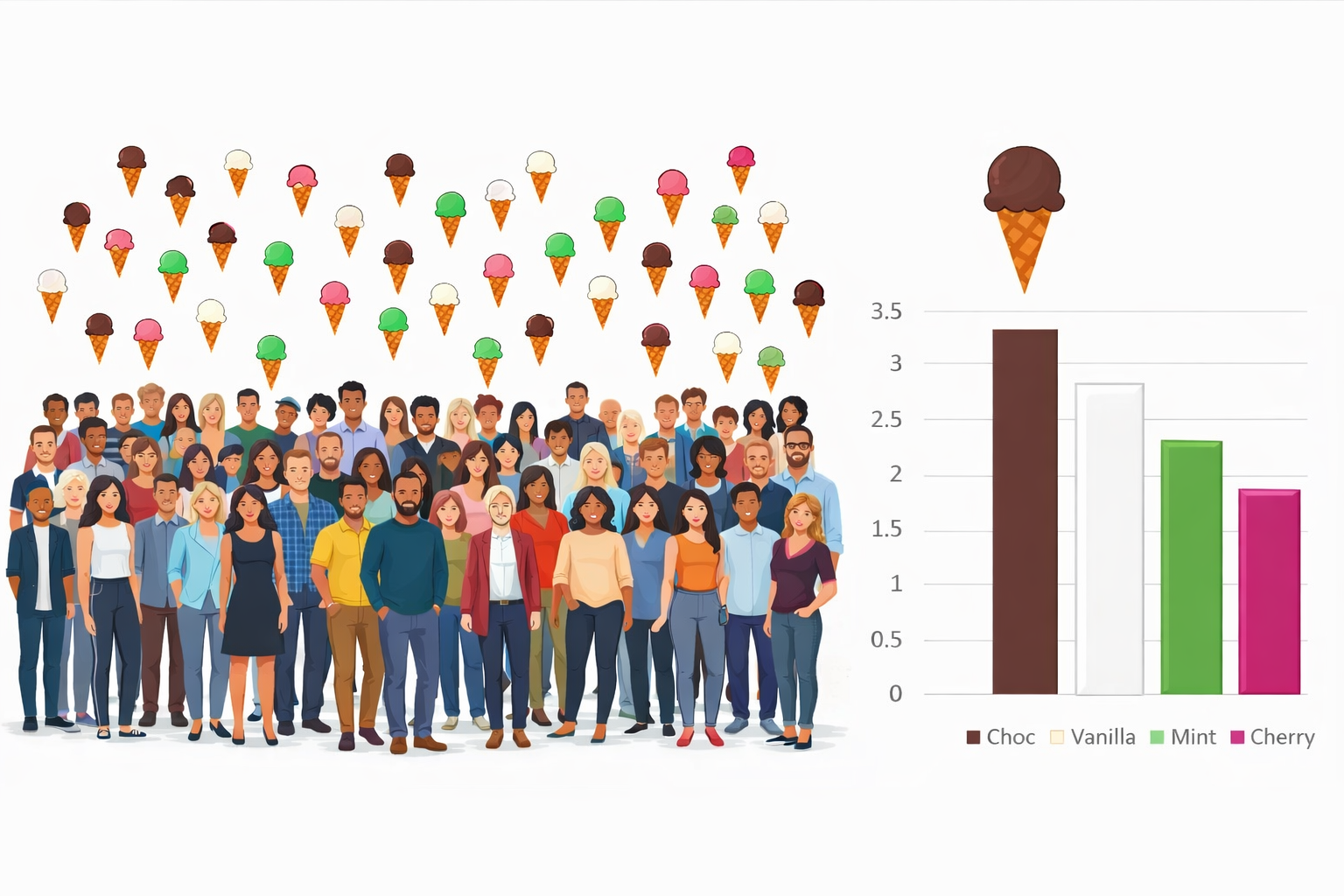
1 item: Chocolate (reaches 67%)
2 items: Chocolate + Vanilla (reaches 84%)
3 items: Chocolate + Vanilla + Strawberry (reaches 91%)
4 items: Chocolate + Vanilla + Strawberry + Mint (reaches 94%)
Notice how the incremental gain shrinks: the jump from 1 to 2 items adds 17 points, but going from 3 to 4 only adds 3 points. This helps you identify the point of diminishing returns where adding more options isn't worth the cost. In fact, some options may be of no value at all, if they do not attract any additional buyers
Important Considerations
TURF optimizes for reach, not revenue. An option that reaches many people may not be the most profitable or the easiest to offer. Cost, margin, and operational constraints still need to be considered.
The wording of the selection question matters. “Would consider,” “would buy,” and “would use” can lead to different results. The question should reflect how people actually make decisions in your category.
TURF vs. MaxDiff
These methods answer different questions. MaxDiff tells you which individual items are most preferred. TURF tells you which combination of items reaches the most people. An item could rank low in MaxDiff (few people's #1 choice) but add significant reach in TURF (it appeals to a unique segment that other items miss). For more on how these techniques compare, check out our Best Practices: Additional Analytics resource.
In practice, the two methods often complement each other. MaxDiff helps you understand relative preference; TURF helps you build the right portfolio. TURF analysis helps when you need to choose a limited number of options and want to appeal to as many people as possible. It does not tell you what to launch on its own. It helps you understand the tradeoffs between different combinations, and makes these decisions clearer and easier to explain.